You have someone on your team you believe in. You’ve seen flashes of greatness. You gave them the role because you could picture who they’d become in it. You’ve coached them, protected them a little, told other people they were going to be great.
And they still haven’t gotten there.
Not failing, necessarily. Just not leading. The team under them is drifting. You’re filling gaps you shouldn’t be filling. And you keep telling yourself they’re close, because every few weeks there’s a good week that makes you believe it again.
Deciding when to let an underperforming leader go is one of the loneliest calls an owner makes, and most people make it about a year later than they should.
Why This One Is Hard
What makes this different from a straightforward performance problem is that you’re probably not wrong about them.
When you believe someone has it in them, you’re usually seeing something real. The capability is there. The character is there—they align with core values. On a long enough timeline, in the right setting, with the right support, they might become exactly who you think they are.
But potential and trajectory are two different things.
Potential asks: could this person become great?
Trajectory asks: are they becoming great, here, at a rate that works for the business?
You can be completely right about the first and completely wrong about the second. Most owners who wait too long aren’t deluded about the person. They’re measuring the wrong thing and talking themselves into the answer.
SNL
Lorne Michaels has run Saturday Night Live for five decades, which means he’s made this exact decision more times than almost anyone alive. Every season he’s casting people who might become stars, and every season he’s deciding who isn’t going to.
The way he’s described it over the years is roughly this…
You give them opportunities. You try to help them find their place on the show, the thing only they can do. You move them around, write to their strengths, give it time.
And eventually you just know.
Which sounds like a dodge until you think about what’s underneath it. He isn’t saying the decision is arbitrary. He’s saying that after you’ve done everything structural you can do, there’s a judgment call.
The Part You Can Write Down
Do the structural work first, making a real attempt to give this person what they need to win.
That means getting specific about things that have probably stayed vague:
- What this role is actually responsible for. Written down, not implied.
- What success looks like, in numbers where numbers exist and in plain description where they don’t.
- What behavior you need to see change, named directly enough that they could repeat it back to you.
- Whether they’re aligned with your core values, which is a separate question from whether they’re producing.
- A date on the calendar when you’ll both sit down and assess honestly.
That last one matters, a lot. Without a date, you’ll keep extending by default and calling it patience. With a date, you’ve committed to a moment of honesty, and so have they.
One caution. A lot of leaders write this kind of plan and then never coach through it. They hand it over and wait to see what happens. If you believe in this person, the plan is the start of your effort, not the end of it.
If you’re carrying someone right now and you can’t tell whether you’re being patient or avoidant, that’s worth talking through with someone outside it.
Book a CallThen There’s Your Gut
Most advice stops here, and it shouldn’t.
Trust your gut is good counsel. Your instinct is pattern recognition built from years of watching people, and it often reads something real before you can articulate it.
But guts have biases.
The most common one is being too patient with someone you like. If this person is loyal, or has been with you a long time, or reminds you of yourself at that age, your gut will keep finding reasons.
Then again, sometimes a person’s style irritates you, and you read that as a capability problem when it’s actually a preference problem. Some people get written off early and unfairly.
So check it against something outside yourself. Two ways that can work:
Ask someone with no stake.
Not your spouse, not a direct report. A peer, a coach, someone who can hear the facts without inheriting your history with this person.
Or ask yourself what you’d tell another owner sitting across from you describing this exact situation.
People give far better advice than they take, and the gap between the two is usually where the truth is.
One More Helpful Question
When I’m with a leader who’s stuck on this, there’s one question that cuts through faster than anything else.
Knowing everything you know now, would you hire this person into this seat today?
Not would you hire them at all. Not do you like them. Would you put them in this specific role, with what you now understand the role requires.
If the answer is no, you’re not deciding whether to make a change. You’re deciding how much longer to delay one.
Three Signs the Time Is Up
Beyond the gut check, there are three conditions where I’d stop waiting regardless of how much you believe in the person.
You’re at risk of losing other high performers.
This is the most urgent one. When someone isn’t leading, the people under them are the ones paying for it. No coaching, no clarity, nobody advocating for them upward. Your strongest people won’t complain about it. They’ll just get recruited, and you’ll hear the real reason in the exit conversation, if you hear it at all.
The progress doesn’t match the effort you’re putting in.
Track this honestly. If you’re spending four hours a week propping up a seat and the seat is moving an inch a quarter, that’s not an investment anymore. And notice what else those four hours could have been. There’s a version of your business where that time went into the people who are ready.
You’ve run out of role adjustments that don’t break something.
If you’ve reshaped the job twice and you’re contemplating a third version that bends the org around one person’s weaknesses, you’ve left development and entered accommodation.
When to Change the Structure, and When You’re Just Catering
That third point needs a caveat, because sometimes the structure really does need to change.
As a company grows, roles specialize. The person who did four things at 12 employees shouldn’t be doing four things at 80. Narrowing someone’s scope so they can go deep on the thing they’re best at is often exactly right, and it’s one of the better moves available to you.
The test for whether you’re restructuring or rationalizing is simple.
If you’re reorganizing around someone’s weakness, they have to be exceptional at the remaining specialty. Not solid. Not better than the alternative. Exceptional, in a way that justifies building around them.
If they’re merely good at the narrowed role, you’ve just redesigned your org chart to protect a person, and everyone can see it. That’s how companies end up with seats that exist for historical reasons, filled by people who were right for a version of the business that no longer exists.
Catering to legacy people is one of the quietest ways a growing company settles for less quality than it now requires.
The Most Generous Version of Goodbye
Sometimes the loving thing is to let someone go so they can flourish somewhere else.
People who were struggling in a seat that didn’t fit go somewhere new and become who you always thought they could be. The potential you saw was real. It needed a different environment. And that’s ok.
Keeping someone in a role they’re quietly failing at is not kind. They know. They feel it every day, they’ve probably felt it longer than you have, and the longer it goes the more it costs them in confidence.
There’s also a middle path worth considering, particularly when the person is family, or someone who matters to you personally, or excellent at one thing that doesn’t justify a full-time seat.
Help them start an LLC and become their first client.
I’ve seen this work. The person does the thing they’re actually great at, for you and for others. You get that work at the level you need without carrying a seat that doesn’t fit. And the relationship often improves, because what was straining it was the mismatch, not the person.
Same caution applies, though. Don’t contract with them for work you need done excellently if they’re only decent at it. Still can’t settle on the quality you need.
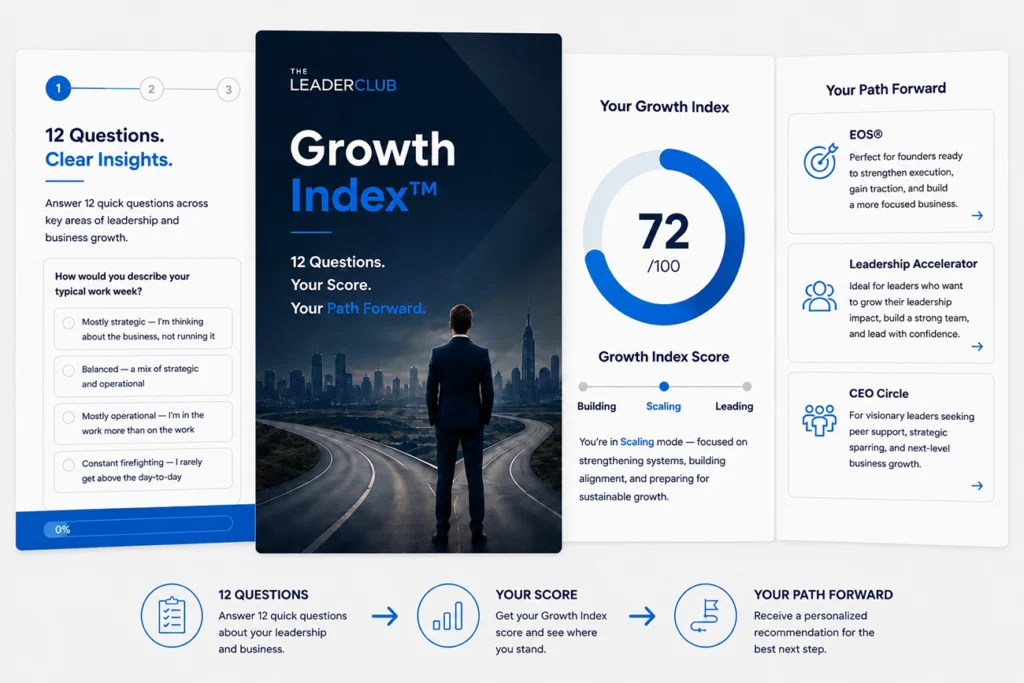
The Founder Growth Index™ tells you which gear needs work.
Scored across multiple dimensions, it shows you exactly where your business is constrained and where to focus first.
Lastly…
Do the structural work. Write the plan, name the expectations, set the date, and coach them like you mean it.
Then let yourself know what you know.
Most owners aren’t wrong about the person. They’re measuring potential when they should be measuring trajectory, and reality.
So the question worth sitting with:
Knowing what you know now, would you hire them into the seat today? And if not, what exactly are you waiting to find out?
More on this: why owners become the bottleneck · what EOS® actually is · work with Caleb as an EOS Implementer · all resources
Turn high-performers into real leaders.
Schedule a call with me to learn about a 12-skill leadership development program we’ve created that’s helping high-performers become real leaders.